Does it answer where guests write?
Yes. Telegram, WhatsApp, VK and MAX are included in the “Personal Assistant” plan. All conversations come together in one window — you don't need four apps open.
Does it pick up the phone at peak hour?
No, it does not take calls — it answers in chats. The point is different: some of the guests who are now fighting through a busy line will simply write and get an answer within a minute. The phone unloads itself as a result.
How does it know whether a table is free?
From your POS: iiko, r_keeper, Quick Resto or Saby Presto connect in the dashboard, and a calendar in the app works too. It sees the booked hours and won’t offer them. If you keep reservations in a notebook by the host stand, it agrees on a time by your own rules — how late you seat, and for how many.
Does it enter the reservation into the table ledger itself?
Yes: the agreed table goes into your reservation book — the same one the floor keeps. The reminder reaches both the guest and the shift, in the same messenger the guest wrote to.
A guest asks about allergens — what does it answer?
What is in the dish: whether there are nuts, milk, gluten, how spicy it is. That is an answer from the dish card in your menu, not medical advice: whether the guest may eat it is not for the agent to decide, and it says so outright. What is not in the menu it does not invent.
Can it see where the courier is right now?
No. About delivery it answers from your rules: the zone, the minimum order, the usual time at this hour. Where the courier is it does not know and will not invent — that is exactly the kind of invention guests never forgive a bot for.
Does it take delivery orders?
It collects the order, the address and the time in the chat and passes them to your POS — iiko, r_keeper, Quick Resto or Saby Presto — so the kitchen never has to ask twice. Orders from Yandex Eda land in the same inbox. Sending the courier and closing the shift stay with you.
What does “sends the menu as a file” mean?
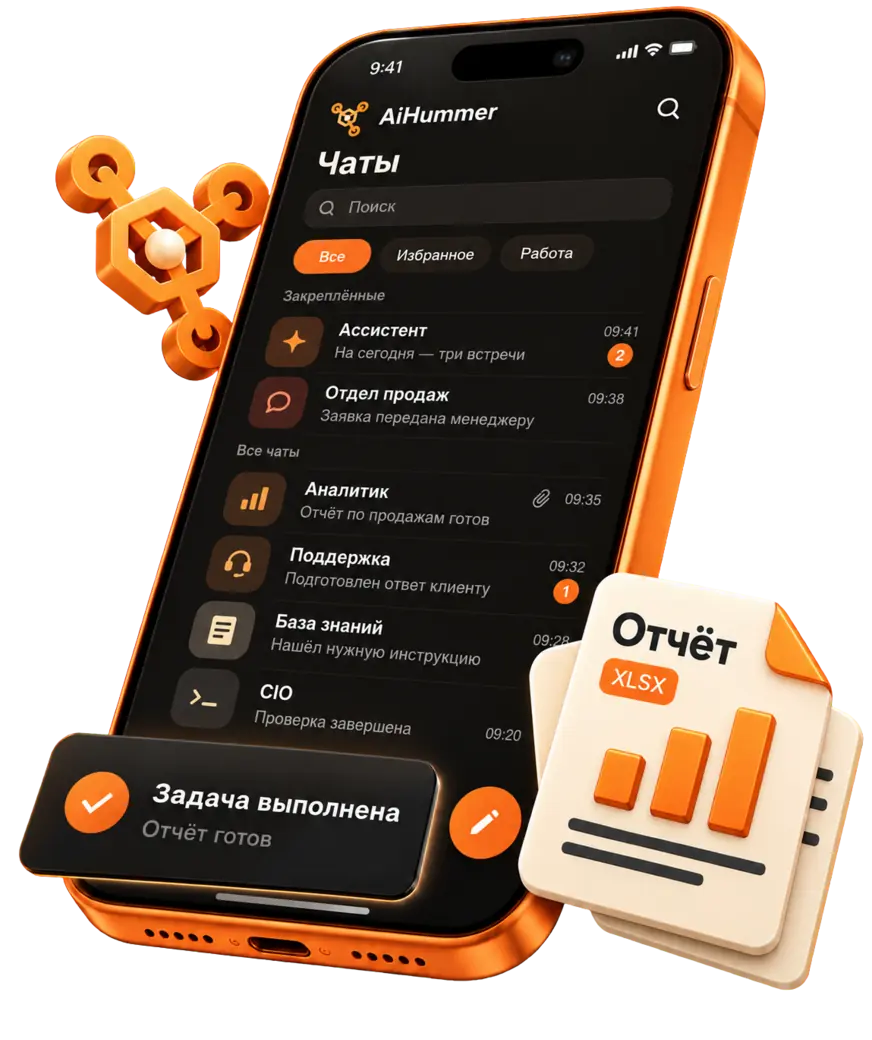
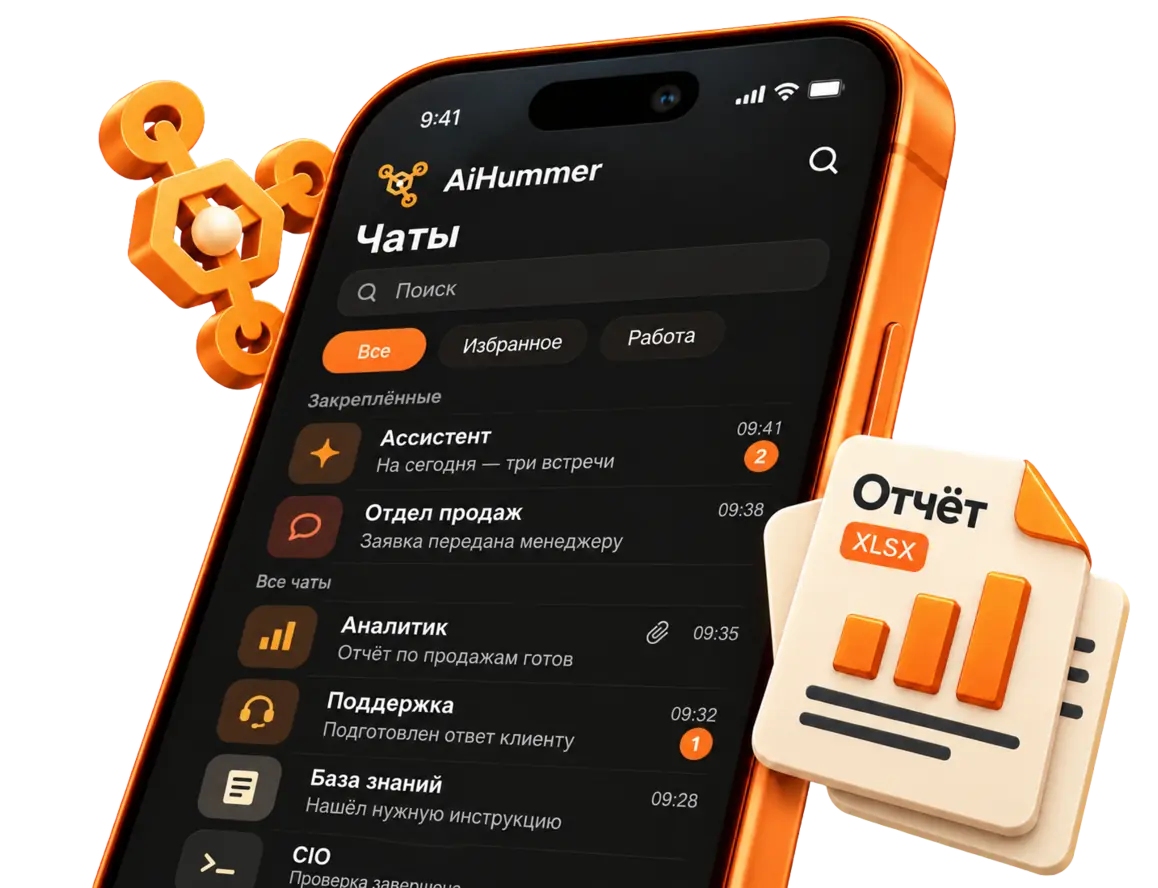
It puts together the list of dishes with prices and cooking times and sends it as an attachment straight into the conversation — the guest opens the file in the very place they asked. A banquet menu and a list of what travels well go out the same way. It makes the file itself, from your menu.
Does it remember regulars?
It pulls up past conversations with this person: what they had, whether they asked for no onion, which table they sat at. The guest does not have to repeat it every time. What it remembers is the correspondence — what was asked for. Even with that memory it does not undertake to decide whether a dish is safe with an allergy: it gives the ingredients, and the conclusion stays with the guest and their doctor.
What has to be done before the first run?
Connecting a model is the first step in your account and takes a minute. Until a model is chosen the agent will not answer a single message: the thinking is done by the model, not by our server. After that you upload the menu and the rules and connect the channels.
Where does it get the menu and the delivery rules?
You upload the menu, the prices and the rules once — it answers from them. If the stop-list or a price changes, you change it in one place. What is not there it does not invent: it says outright that it has no such answer.
Where are the conversations with guests kept?
In the AiHummer cloud. If that does not suit the venue, the same product installs on your own server, and then conversations never leave it.
What does it cost?
RUB 1,790 per month or RUB 17,900 per year. 1 AI agent. Your channels, a mobile app.
Can I see it before paying?
There is a demo sandbox with no sign-up — login and password below. The trial period is 10 days, available once.





























 Telegram